Move people and equipment to the scene
Access, crew seating, storage layout, equipment mass and the intended work area shape the base vehicle and body layout.
EMERGENCY RESPONSE SUPPORT
Emergency rescue fleets may need equipment transport, scene lighting, lifting support or a way to move dedicated modules. Define the task and operating environment first, then compare vehicles by the role and equipment scope they are intended to support.
Discuss an emergency rescue vehicle ↗THE INCIDENT-SITE CHALLENGE
Rescue support can mean different tasks. A clear equipment and deployment brief helps avoid treating unlike vehicle roles as interchangeable.
Access, crew seating, storage layout, equipment mass and the intended work area shape the base vehicle and body layout.
If lifting, winching, lighting or onboard power is required, define the exact task, duty cycle, reach, loads and safe working conditions.
For modular support, specify module dimensions, loaded mass, securing and connection interfaces, and the process for loading and exchange.
THREE DISTINCT SUPPORT ROLES
These published vehicles represent equipment support, scene-support equipment and modular transport roles. Review each vehicle against the actual task; the roles are not substitutes for one another.
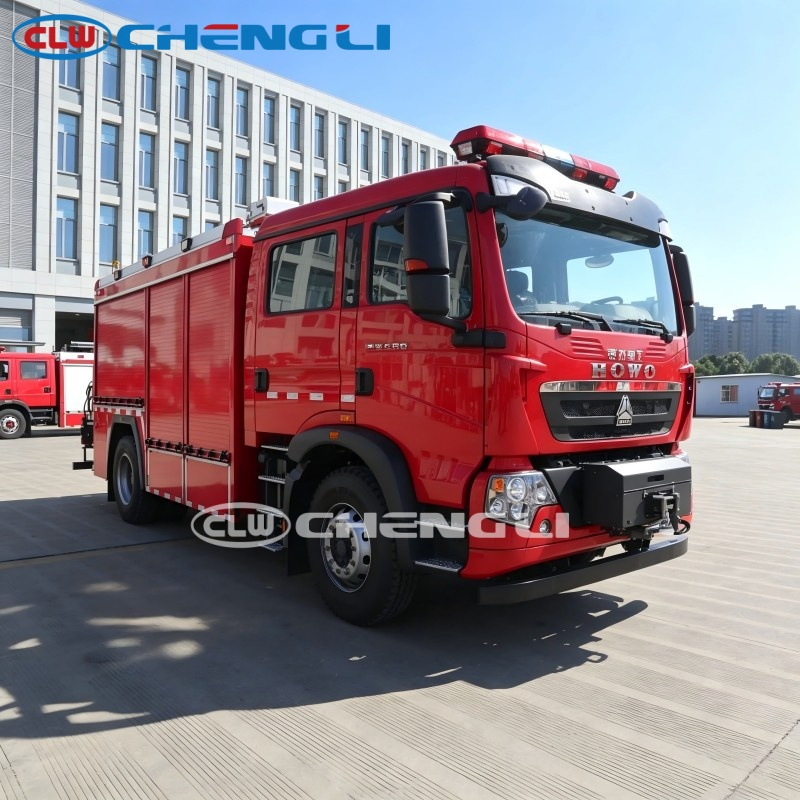
EMERGENCY RESCUE SUPPORT
A 4×2 rescue-support platform with a 5-ton knuckle-boom crane, winch, scene lighting and generator.
View vehicle details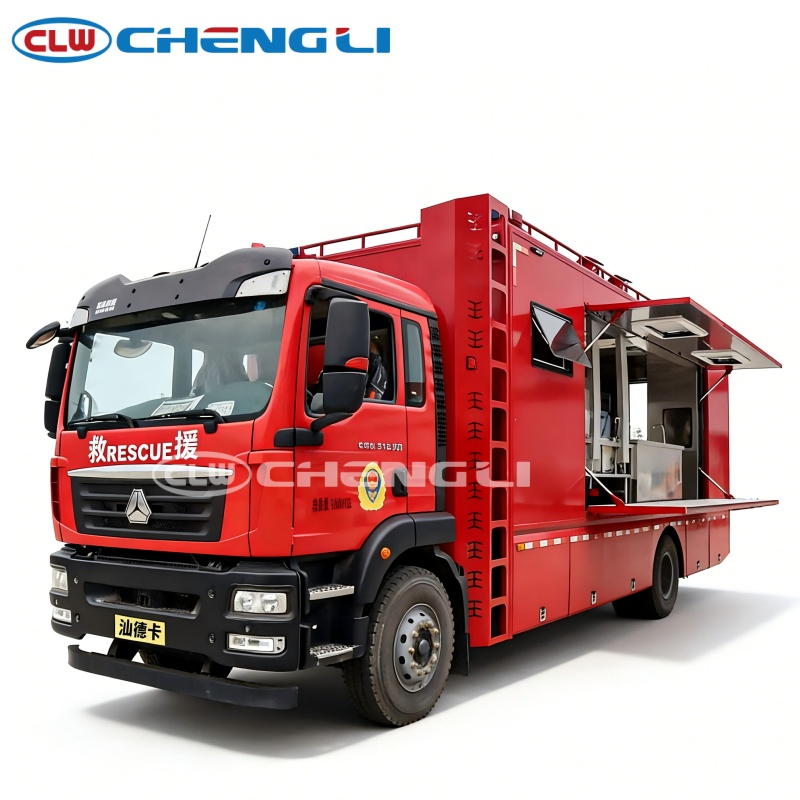
EMERGENCY RESCUE SUPPORT
An equipment-staging and incident-site support vehicle for teams defining their own inventory, access and deployment method.
View vehicle details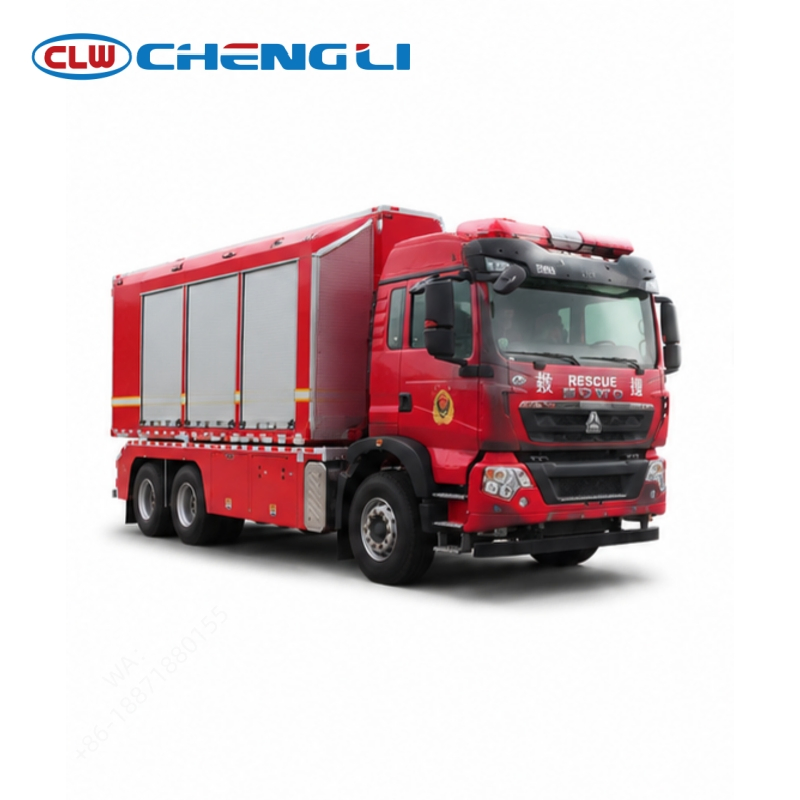
EMERGENCY RESCUE SUPPORT
A hook-lift support option for transporting and exchanging mission-specific emergency modules.
View vehicle detailsCONFIGURATION DECISIONS
Describe the response area, access, terrain, weather, crew, work location and how the vehicle will be positioned and used.
For each item, provide its mass, dimensions, power needs, operating duty, mounting or connection details and any required working envelope.
Review chassis limits, axle loads, payload, body layout and stability with the equipment in its transport and operating configuration.
Specify restraints, storage, controls, crew access, training, manuals, spare parts, inspection and acceptance requirements.
WHAT TO INCLUDE IN AN RFQ
Final equipment, specifications and price are quoted against the confirmed project configuration.
EMERGENCY RESCUE VEHICLE QUESTIONS
When the defined incident-support task calls for onboard lifting, specify the load, reach, working position, duty and site conditions. Confirm the complete equipment and vehicle configuration against those requirements.
Provide each module’s dimensions, loaded mass, center of gravity where available, securing and interface details, plus the intended loading area and exchange process.
That depends on the tasks, payload, crew, equipment and deployment method. Define which work must be performed together and review the complete vehicle layout and operating limits before combining roles.
BUILD A TASK-BASED BRIEF
Share the task, equipment inventory, deployment conditions and support expectations for a focused vehicle discussion.
Discuss an emergency rescue vehicle ↗ Chat on WhatsApp