Dry powder fire trucks
A dry powder system provides rapid knockdown for running and three-dimensional fuel fires. Confirm whether the proposed configuration also carries a water tank.
VEHICLE FAMILY
Airport fire trucks — also called crash tenders or ARFF (aircraft rescue and firefighting) vehicles — carry the agents and equipment an airport fire service needs for aircraft and fuel fires. This family lists eight Chengli configurations on Isuzu, HOWO and Shacman chassis, from 4×2 first-response units to 8×4 combined-agent tenders. Each can be adapted to your airport’s specification through project customisation and OEM/ODM services.
Discuss this vehicle family ↗Start with the role the vehicle will play in your airport’s response plan, then choose the agent package and chassis.
A dry powder system provides rapid knockdown for running and three-dimensional fuel fires. Confirm whether the proposed configuration also carries a water tank.
Foam covers and cools fuel spills; dry powder addresses running fuel fires. Combined-agent configurations carry both systems for a defined airport response role.
For first response, airside access roads and smaller airfields, or as a support vehicle beside a larger tender. Confirm route access and the completed equipment package.
If your tender documents reference an ICAO airport category, NFPA 414 or a national airport standard, send the relevant clauses with your enquiry. We will document which requirements the proposed configuration meets and which need further confirmation. Performance figures are confirmed for each project, not assumed from this page.
Reference prices for the eight listed configurations currently range from about USD 35,000 to USD 84,000 per vehicle. They are not FOB or CIF quotations; the final price depends on chassis, agent systems, equipment, quantity and delivery scope.
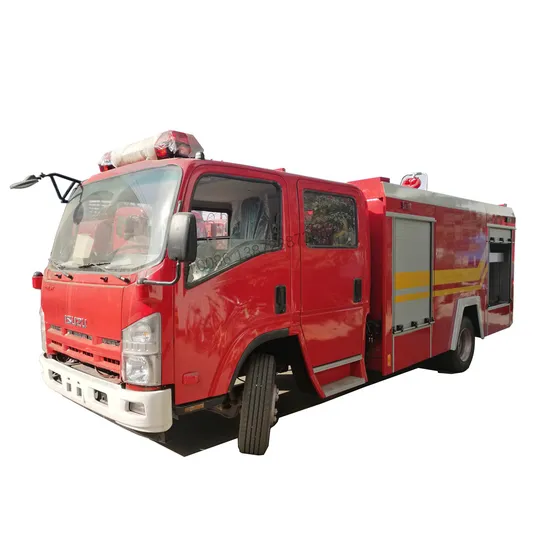
Isuzu 4×2 airport fire truck, model CLW5070GXFQ4, with a manual-transmission chassis for a first-response equipment package.
View details ↗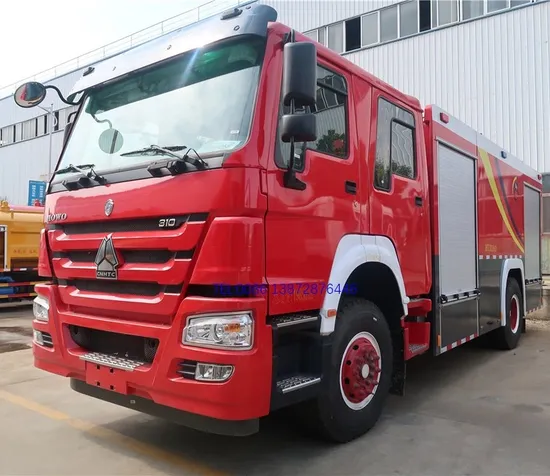
HOWO dry-powder fire truck configuration for an airport agent-delivery brief, with the chassis layout and system capacity confirmed for the proposed build.
View details ↗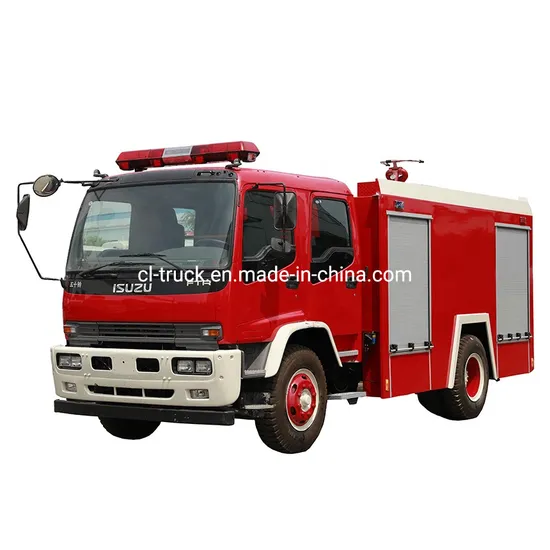
Isuzu 4×2 airport fire truck with a diesel chassis for first-response and support duties, with the agent package specified for the airport role.
View details ↗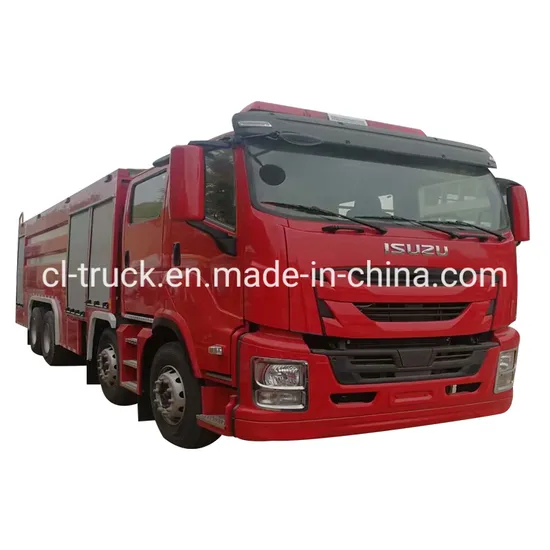
Isuzu 8×4 combined dry powder and foam fire truck, model CLW5420XFJY, for an airport main-tender configuration.
View details ↗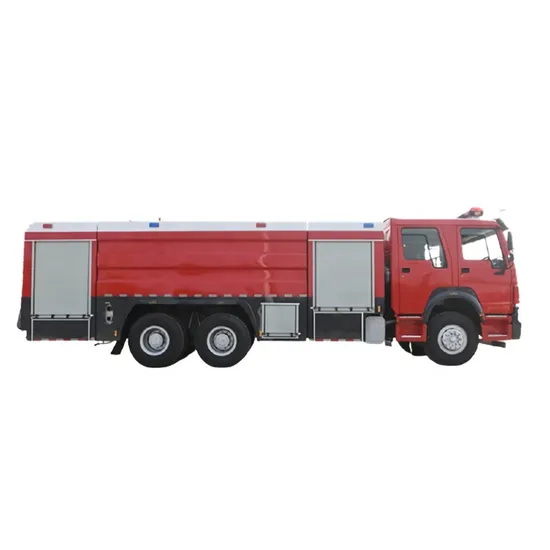
HOWO 6×4 combined dry powder and foam fire truck for airport fuel-fire response, with the agent split and installed equipment agreed for the project.
View details ↗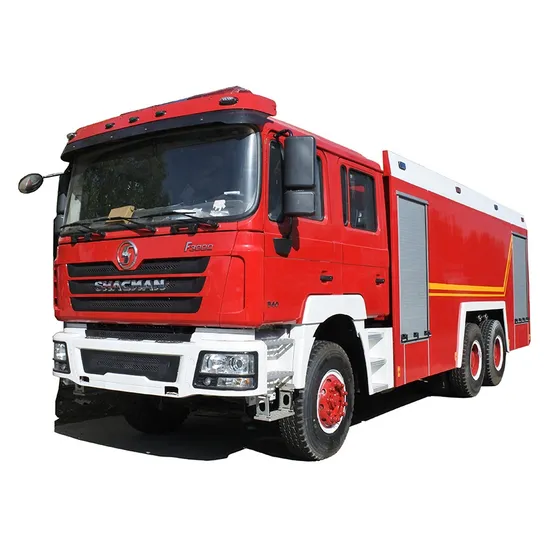
Shacman combined dry powder and foam fire truck, model SH5342D654-E, for an airport response brief with separate agent and equipment requirements.
View details ↗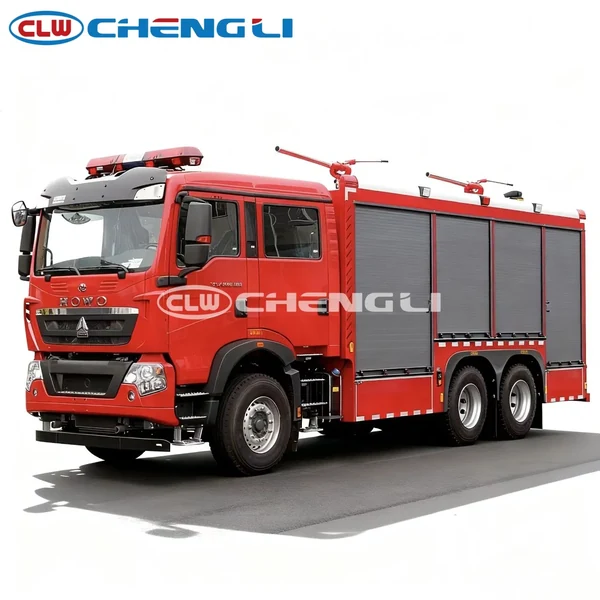
HOWO 6×4 dry-powder fire truck with a 4,000 L nominal powder vessel for fuel-area and industrial response duties.
View details ↗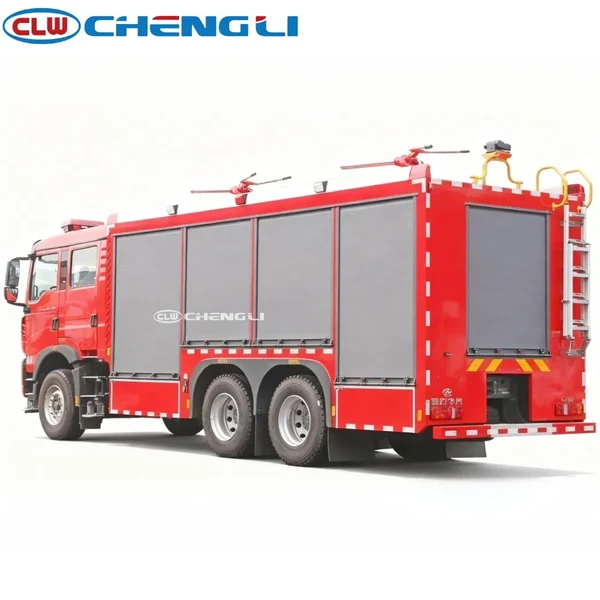
HOWO 6×4 dry-powder fire truck with two 3,000 L nominal powder vessels for a separately specified powder-discharge package.
View details ↗They are names for the same class of vehicle. Crash tender is common in British and Commonwealth usage; ARFF means aircraft rescue and firefighting; airport fire truck is the general term. All describe a fire vehicle that carries agents and equipment for aircraft and fuel-fire incidents on an airfield. The equipment and response role are specified for the airport.
Foam is used to cover and cool fuel spills; dry powder is used for rapid knockdown of running and three-dimensional fuel fires. Many airport fire services use both, either on one combined-agent vehicle or across two vehicles. Tell us your airport’s agent requirement and current fleet, and we will propose the split.
The listed configurations use Isuzu, HOWO (Sinotruk) and Shacman chassis, including 4×2, 6×4 and 8×4 layouts. Other chassis can be reviewed through OEM/ODM if they suit the body, agent load and axle limits. The exact chassis is confirmed for the proposed build.
Yes, through project customisation. Send the tender specification, including agent quantities, discharge rates, crew, equipment list and acceptance tests. We confirm in writing which items the configuration meets and which need further confirmation before quotation.
The destination country and airport, number of vehicles, the vehicle’s role, agent types and quantities, chassis preference, steering side, crew seats, equipment list and delivery terms (FOB, CIF, CFR or EXW).
Separate the airport response role from the agent package. A dry-powder support vehicle, a combined-agent tender and a compact access vehicle need different acceptance schedules; an airport application label alone does not establish aircraft rescue and firefighting compliance.
State whether the vehicle is the primary aircraft-response appliance, a supplementary dry-powder unit or a support vehicle for buildings and access roads. For a primary appliance, attach the applicable airport requirement and ask for a clause-by-clause response with the offered vehicle and acceptance test. A chassis layout and agent name do not prove that role.
The shorter vehicle is 8,770 × 2,520 × 3,750 mm; the longer vehicle is 9,600 × 2,550 × 3,750 mm. Their length differs by 830 mm, while height is the same. Check the actual bay, approach and swept path rather than treating the shared 6×4 layout as equal access. No turning circle, acceleration or response-time result is established by these dimensions.
Write separate entries for usable water volume in litres, foam concentrate volume in litres and dry-powder charge in kilograms, together with powder type and discharge requirements. A nominal powder-vessel volume does not establish powder charge mass or water capacity. For a combined-agent tender, require each agent quantity separately and the permitted simultaneous operating modes.
Use one schedule for the designated vehicle role, required agent quantities, pump flow at pressure, monitor duty, crew and equipment, loaded axle limits, route and bay dimensions, airport-specific acceptance tests and destination registration requirements. Mark each line as included, excluded or awaiting technical confirmation; compare price only after the scope matches.
A vehicle family is a starting point. The final build follows your project requirements.
Confirm road conditions, station dimensions, crew and equipment loads.
Review local support, driving position, emissions and completed vehicle compatibility.
Agree documents, configuration evidence, testing, training and service responsibilities.
Use a filled buying brief, a clear responsibility split and one accepted drawing revision. Follow a hypothetical two-vehicle project through changes and acceptance records.
Specify separate agent quantities, pump flow at pressure and occupied seats. Use a real-vehicle comparison, a worked storage example and a filled buying brief.
03 / YOUR PROJECT
Include destination, quantity, vehicle role, chassis preference, steering side, crew, water/agent volumes, pump duty, equipment and delivery requirements. Attach the relevant product links and tender specification where available.