PROCUREMENT GUIDE
Fire Truck Types: Fire Engine, Water Tender and Foam Tender
Compare fire engines, water tenders and foam tenders by operational role, agent storage, pump duty and crew requirements.
Published
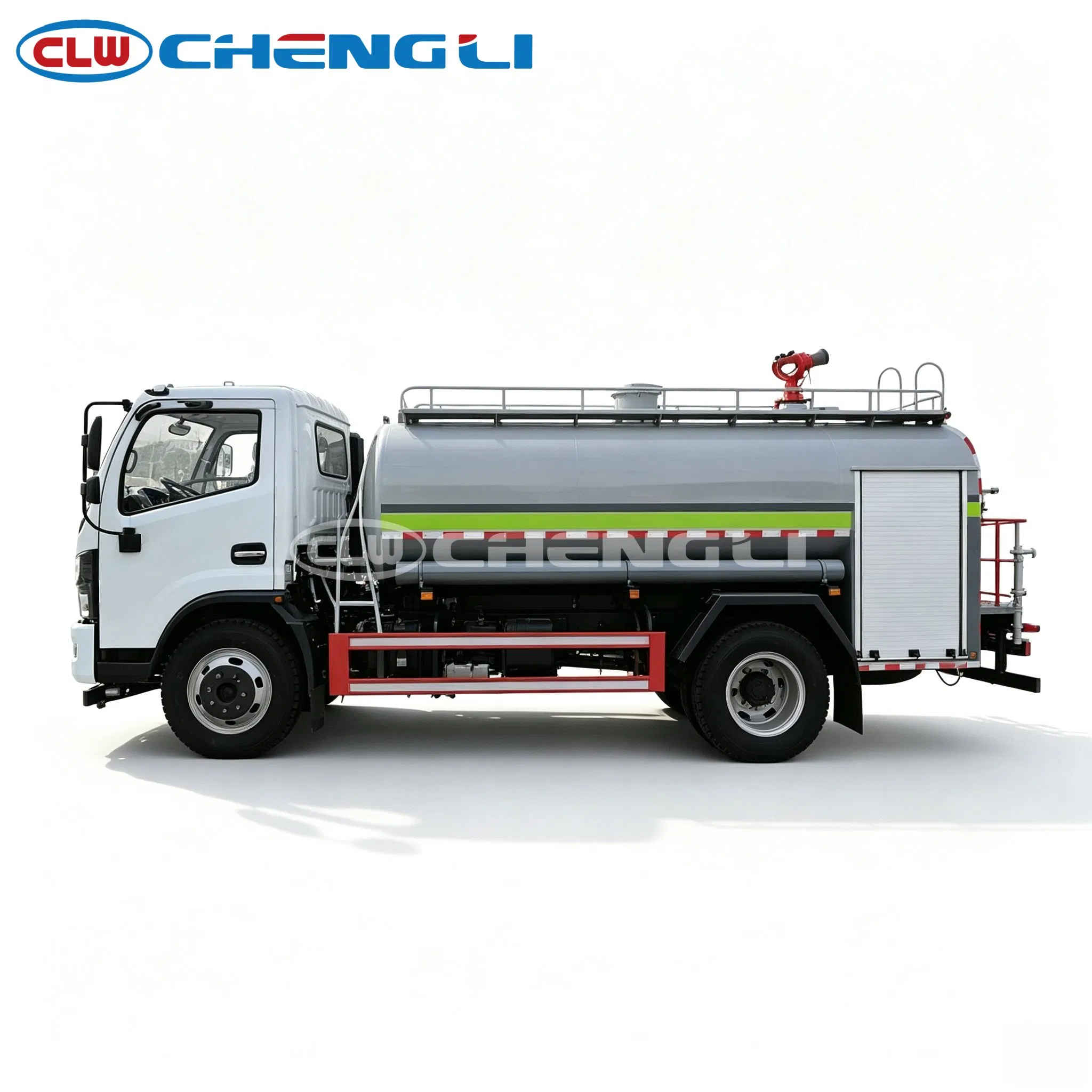
A fire engine, water tender and foam tender are different ways of organising a firefighting vehicle around its main job. A fire engine or pumper emphasises pumping and equipment deployment. A water tender prioritises carrying and replenishing water. A foam tender adds the agent storage and proportioning equipment needed for a specified foam application. These names overlap between buyers and manufacturers, so a purchase brief should describe the required work rather than rely on the name alone.
Start with the fire truck and rescue vehicle range, then compare the pumper family with water and foam fire trucks. The categories organise the catalogue; the installed systems on each vehicle determine its actual role.
1. Compare roles, not just vehicle names
| Vehicle description | Procurement emphasis | What to compare |
|---|---|---|
| Fire engine or pumper | Pumping, crew and carried equipment | Pump duty, outlets, connections, seats and storage |
| Water tender | Transporting and replenishing water | Tank volume, refill arrangement, chassis and equipment space |
| Foam tender | Carrying foam concentrate and delivering an agreed agent mixture | Separate tank volumes, agent compatibility and proportioning system |
| Rescue truck | Moving tools and providing incident support | Equipment inventory, compartment layout, lifting, lighting and power |
The same truck can combine several roles. A vehicle with a larger water tank may still include a firefighting pump, while a pumper may carry its own initial water supply. Rosenbauer's tank firefighting vehicle overview illustrates how tank capacity and pump technology form configurable vehicle packages. This is a useful industry comparison, not evidence that another manufacturer's specification applies to a Chengli truck.
For a municipality, the useful question is how the new vehicle will work with the existing fleet. Will it provide the first pumping unit, supplement water transport or carry specialist equipment? A contractor or industrial buyer may have a narrower support requirement. Explain which capability is essential and which can remain with another vehicle. This helps avoid paying for a complicated package that does not solve the main procurement need.
2. Water capacity and pump performance are separate decisions
A tank volume describes the quantity carried. Pump performance describes delivery at specified operating conditions. A larger tank does not automatically mean a more powerful pump, and a large pump does not remove the need for a reliable replenishment plan. Compare these two requirements separately before selecting the chassis and body arrangement.
The Dongfeng 4×2 7,000 L Fire Sprinkler Truck gives a concrete starting point: its product details identify a 7 m³ water tank and a rear-mounted CB10/30 pump. The CLH5170 4×2 Water Fire Truck has a different published water-volume entry, 7.56 m³. Compare the full records rather than assume that vehicles close in nominal capacity have identical cabs, pump installations or equipment allowances.
List the water source, travel between replenishment points and required connection arrangement in the enquiry. Also give the station and route constraints. A configuration that suits a wide industrial road may be awkward at a narrow municipal station. Do not select axle layout from tank size alone; discuss access, equipment and completed-vehicle loading together.
3. Foam and rescue equipment change the buying brief
A foam truck is more than a water truck painted differently. Procurement needs to cover concentrate storage, the proposed proportioning equipment and compatibility with the agent specified by the buyer. A total liquid figure should not hide the split between water and foam concentrate. Rosenbauer's industrial vehicle explanation shows why industrial packages may emphasise foam systems and site water supply differently from municipal vehicles.
Ask for the water volume and concentrate volume as separate entries. Where additional agents are proposed, give them separate names and units too. The appropriate agent and operating arrangements belong in the buyer's risk assessment and technical specification; a general catalogue cannot decide them for a particular incident.
Rescue vehicles also deserve a separate comparison. The HOWO 4×2 Fire Rescue Truck with 5-Ton Knuckle-Boom Crane is organised around lifting and incident-support equipment. Its crane designation is not a statement that the same load can be lifted at every outreach. Request the selected crane's load chart and include the intended equipment inventory when comparing that vehicle with a water-carrying truck.
4. Turn the comparison into a clear vehicle enquiry
Chengli Group supplies project-configured vehicles and accepts OEM/ODM enquiries. Begin with the role, destination, quantity and preferred chassis. Then specify the crew, carried equipment, water and foam volumes where relevant, and the required pumping package. Branding and paint can follow once the functional brief is clear.
For buyers in Nigeria, Ghana, Kenya, Tanzania, Zambia and Zimbabwe, include the country and delivery location rather than assuming one configuration suits all six markets. Identify steering side and locally supported chassis preferences in the brief. This article does not certify a vehicle for any country's registration system or an airport response category.
Compare proposals using the same scope: complete vehicle, installed systems, equipment, documentation and delivery terms. The final technical specification and commercial scope are agreed in the quotation. Use the contact page to send the brief, or keep the relevant product link with your enquiry so the discussion starts from the configuration you selected.
Guide questions.
Is a fire engine the same as a fire truck?
Fire truck is a broad commercial term. Fire engine often describes a pumping vehicle, but terminology varies. State the required pump, carried water, crew and equipment instead of relying on the label.
Can one truck carry both water and foam concentrate?
Yes, a water-and-foam configuration can combine them. Specify the volumes separately and ask for a compatible installed proportioning package rather than treating the total tank figure as the full specification.
Should every fleet buy the largest water tender?
No. Compare replenishment, access, equipment and the role within the existing fleet. A larger tank may suit one duty while a different vehicle provides the crew and pumping package needed elsewhere.
Vehicles discussed in this guide
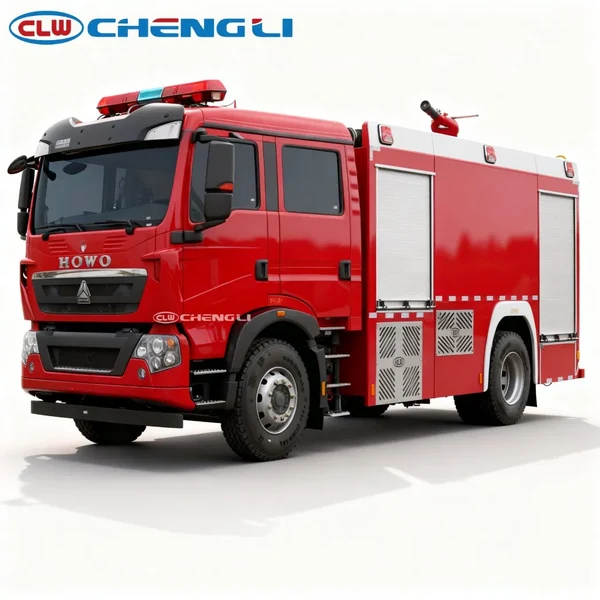
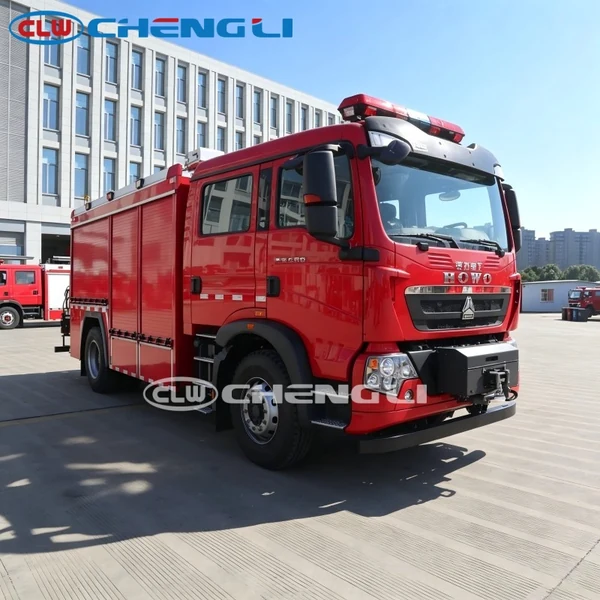
HOWO 4×2 Fire Rescue Truck with 5-Ton Knuckle-Boom Crane
HOWO 4×2 rescue truck combining a 5-ton knuckle-boom crane, 75 kN winch and 12 kVA generator for lifting, recovery and scene support.
View details ↗