PROCUREMENT GUIDE
How to Specify a Fire Truck: Tank, Pump and Crew Cab
Specify separate agent quantities, pump flow at pressure and occupied seats. Use a real-vehicle comparison, a worked storage example and a filled buying brief.
Published
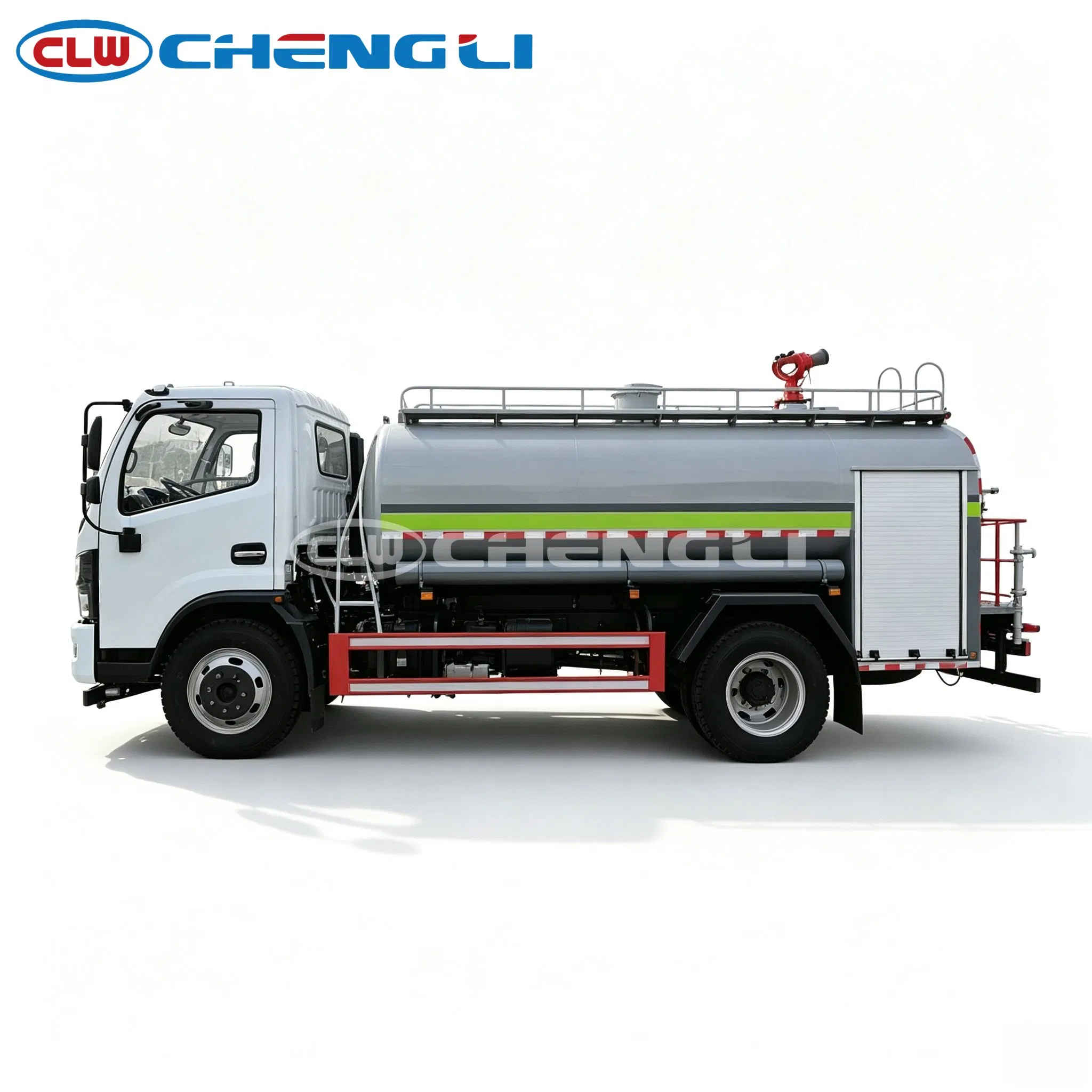
Specify the water tank, foam tank, pump duty and occupied seats as separate requirements. For a useful first comparison, the HOWO compact 4×2 water fire truck combines 4,000 L nominal water storage with a pump duty of 30 L/s at 1.0 MPa. The Dongfeng F5 4×2 water/foam truck has separate 6,000 L water and 2,000 L foam tanks, with 40 L/s at 1.0 MPa. Those are different packages, even before the seating and equipment layout are considered.
Start with the water and foam catalogue or pumper catalogue. Keep one vehicle link with each comparison, so a tank from one record does not accidentally become paired with another vehicle's pump or cab.
Read the tank and pump figures on the same basis
| Configuration | Nominal water storage | Separate foam storage | Pump duty | The same flow in L/min |
|---|---|---|---|---|
| HOWO compact 4×2 | 4,000 L | Specify separately if required | 30 L/s at 1.0 MPa | 30 × 60 = 1,800 L/min |
| Dongfeng F5 4×2 | 6,000 L | 2,000 L | 40 L/s at 1.0 MPa | 40 × 60 = 2,400 L/min |
The second configuration carries 2,000 L more nominal water, or 50% more than the first. Its separate foam tank does not turn it into an 8,000 L water truck. Compare the complete flow-and-pressure duty; CB10/30 or CB10/40 model names do not replace it.
Pressure and test conditions belong beside the flow figure. For example, Rosenbauer's N10 pump specification pairs 1,000 L/min with 10 bar and a 3 m suction height. This illustrates the information needed to compare pump duties; the offered Chengli configuration needs its own installed-system data. Rosenbauer pump technical data.
A simple capacity calculation before requesting a proposal
For this purchasing illustration only, assume a constant water demand of 1,000 L/min, no replenishment and the full nominal tank volume available to the calculation. Dividing nominal litres by assumed litres per minute gives the following storage comparison.
| Assumed nominal water volume | Assumed water demand | Arithmetic result | What changes |
|---|---|---|---|
| 3,000 L | 1,000 L/min | 3 minutes | Smallest storage allowance in this example |
| 5,000 L | 1,000 L/min | 5 minutes | 2,000 L more storage than the first row |
| 7,000 L | 1,000 L/min | 7 minutes | 2,000 L more storage than the middle row |
At an assumed 2,000 L/min, the same 5,000 L gives 2.5 minutes rather than five. Increasing pump capacity does not increase the quantity carried. This is storage arithmetic, not a prediction of firefighting duration, a pump test or an operating instruction: usable volume, reserves, losses, replenishment and the required operating conditions have not been modelled.
Write water and foam-concentrate volumes separately. Where the meaning is established, 7 m³ is 7,000 L. Do not turn a payload or whole-vehicle mass into tank volume. The Dongfeng 7,000 L sprinkler configuration and CLH5170 water fire truck provide separate 7 m³ and 7.56 m³ tank comparisons; the 560 L difference does not establish which complete vehicle suits a particular route.
A filled first-enquiry example
The following is a hypothetical buying brief for a new proposal, not a Chengli customer order or a configuration already accepted by an engineer.
| Requirement | Example buyer entry | Specific reply to request |
|---|---|---|
| Vehicle role and quantity | One water/foam vehicle for an industrial-site fleet | Identify the complete vehicle and the proposed chassis |
| Agent storage | 5,000 L water and 1,000 L foam concentrate, separately identified | Tank schedule showing nominal and usable quantities, material and the selected agent compatibility |
| Pump requirement format | Buyer example: 1,000 L/min at 1.0 MPa; supplier to state the inlet and test conditions | Installed pump data, connections and an agreed verification procedure for that duty |
| People | Six travelling occupants in total, including the driver | Drawing identifying the designated seats, access and restraint arrangement |
| Equipment | Four hose lengths, two branch/nozzle assemblies and two breathing-apparatus sets; exact sizes and weights recorded in the attached equipment list | Numbered stowage drawing and equipment schedule; alternatives priced separately |
| Access | Example station opening: 3.0 m wide and 3.5 m high; route survey still required | Completed dimensions and a route/clearance review, rather than a promise based on the word compact |
| Inspection records | Vehicle identity, tank schedule, pump duty and the six-seat layout to be checked against the accepted revision | Proposed inspection method and records, with unresolved items identified before acceptance |
These entries make two common omissions visible. “Double cab” does not answer a requirement for six occupants. “1,000 L/min” without pressure and inlet conditions does not complete the pump requirement. Mark either reply as an open item instead of quietly assuming it meets the brief.
Compare tank, pump and crew as a complete package
| Specification group | Put in the enquiry | Compare in the proposal |
|---|---|---|
| Water and agents | Separate volumes and replenishment arrangement | Tank material, installation and usable arrangement |
| Pumping package | Required flow and pressure, water source and outlets | Installed pump data, connections and agreed test scope |
| Crew cab | Number of people, equipment carried with them and access needs | Seating, restraints, cab layout and equipment storage |
| Vehicle envelope | Station, route, overall dimensions and chassis preference | Completed vehicle dimensions and axle-loading information |
| Equipment | Itemised inventory and compartment priorities | Inclusion list, mounting, storage and service access |
Seating is its own design decision. The Magirus LF 10, for example, identifies its 1+8 crew arrangement separately from its 1,600 L tank. Rosenbauer MT Municipal also separates tank, pump and crew modules. These comparisons illustrate the information to request; they do not supply the seating or performance of a different manufacturer’s vehicle.
Keep the manufacturer of the complete special-purpose vehicle separate from the chassis brand. Chengli is the manufacturing and configuration party; Dongfeng, HOWO, Isuzu or another named make may describe the chassis. Identify the actual offered chassis model and assess it with the installed systems, carried agents, people and equipment included.
Include maintenance access in the layout review. Ask how the pump plumbing and electrical panels can be reached, and where equipment must be removed for service. FAMA's maintenance-specification guide addresses these access choices.
Use a short proposal review record
| Example requirement | Illustrative supplier reply | Buyer review result |
|---|---|---|
| 5,000 L water plus 1,000 L foam | “6,000 L total capacity” | Open: obtain the separate water and concentrate quantities before comparing |
| Six occupants including driver | “Double cab” | Open: obtain a seating drawing and the offered designated-seat count |
| Four specified hose lengths | Four lengths with different couplings | Deviation: identify the interface change and obtain an agreed replacement or revised requirement |
The record is an illustration of reviewing a proposal, not a factory test result. Keep the accepted drawing, inclusion list and later revisions together. When lifting or scene-support equipment is also needed, compare the HOWO rescue truck with crane as a separate equipment package; its lifting equipment does not supply an assumed tank or pump specification.
Send the filled brief and the chosen vehicle links through the contact page. Chengli Group accepts project customisation and OEM/ODM enquiries. Identify mandatory requirements, alternatives to price separately and the exact documents to return with the proposal. The final technical specification and commercial scope are agreed in the quotation.
Compare the configurations below.
HOWO Compact 4×2 4,000 L Water Fire Truck — Compare 4,000 L nominal water storage and the 30 L/s at 1.0 MPa pump duty as one identified water-vehicle configuration.
Dongfeng F5 4×2 6,000 L Water / 2,000 L Foam Fire Truck — Compare separate 6,000 L water and 2,000 L foam tanks with the 40 L/s at 1.0 MPa pump duty, rather than combining both tanks as water.
HOWO 4×2 Fire Rescue Truck with 5-Ton Knuckle-Boom Crane — Its 5-ton knuckle-boom crane and 12 kVA generator identify a separate rescue-equipment package to compare with the carried-tool brief.
Guide questions.
Is tank volume enough to compare two fire trucks?
No. The HOWO example has 4,000 L nominal water storage and 30 L/s at 1.0 MPa; the Dongfeng F5 has 6,000 L water plus a separate 2,000 L foam tank and 40 L/s at 1.0 MPa. Compare designated seats, equipment, dimensions and completed loading separately.
What should I ask for with a pump model?
Request the installed flow-and-pressure duty, inlet conditions, connections and agreed verification procedure. For unit comparison, 30 L/s equals 1,800 L/min. A model name alone does not establish that duty or a usable operating duration.
Can the cab and equipment layout be customised?
Describe the requested occupants and equipment explicitly. In the hypothetical brief, six occupants including the driver require an identified seating arrangement; a reply saying only double cab leaves that item open. The proposal establishes which requested layout can be offered.
Vehicles discussed in this guide
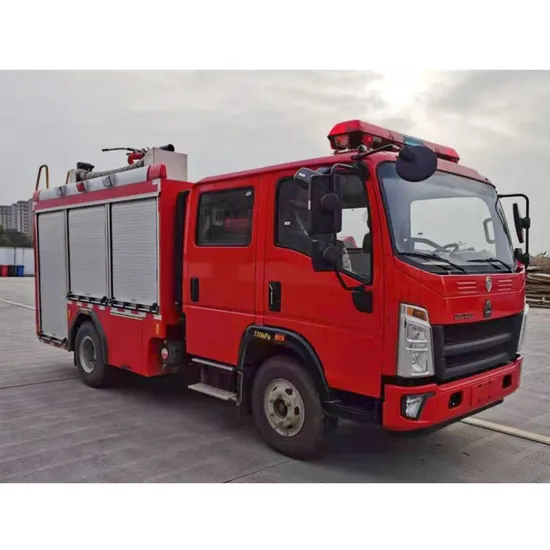
HOWO Compact 4×2 4,000 L Water Fire Truck
Water-based firefighting for communities, factories and rural response teams.
View details ↗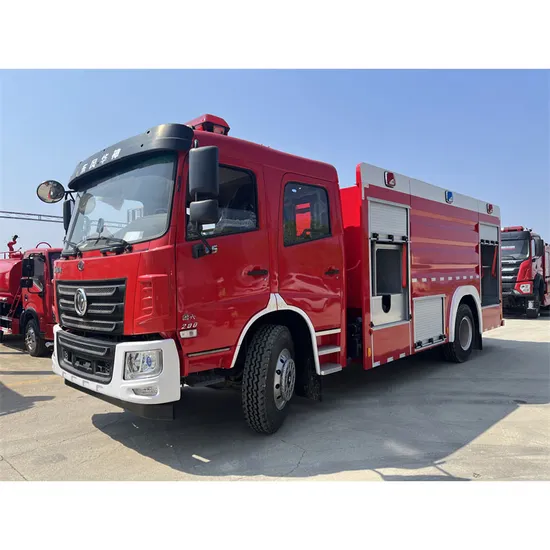
Dongfeng F5 4×2 6,000 L Water / 2,000 L Foam Fire Truck
Municipal and industrial water/foam firefighting.
View details ↗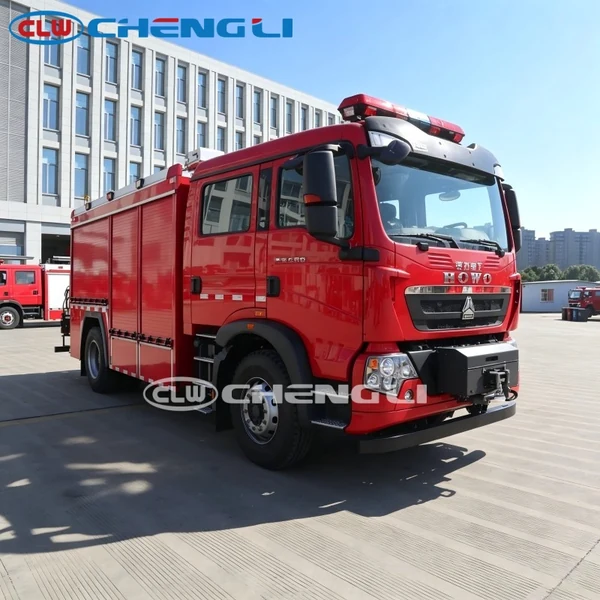
HOWO 4×2 Fire Rescue Truck with 5-Ton Knuckle-Boom Crane
HOWO 4×2 rescue truck combining a 5-ton knuckle-boom crane, 75 kN winch and 12 kVA generator for lifting, recovery and scene support.
View details ↗