PROCUREMENT GUIDE
OEM and ODM Fire Trucks: How a Custom Build Works
Use a filled buying brief, a clear responsibility split and one accepted drawing revision. Follow a hypothetical two-vehicle project through changes and acceptance records.
Published
A custom fire-truck purchase needs four controlled records: a buying brief, an accepted configuration and inclusion list, a change record, and an inspection record. OEM or ODM wording alone does not settle who designs the body, who approves a substitution or which equipment is included. Agree those responsibilities against one identifiable vehicle and drawing revision.
For a concrete starting point, the Dongfeng F5 4×2 water/foam configuration has separate 6,000 L water and 2,000 L foam tanks. The example below uses those quantities to show the paperwork for a proposed build. EX-FR-01 is an invented teaching example, not a real customer, order, factory approval or delivery commitment.
Start with a filled brief rather than “a customised fire truck”
| EX-FR-01 field | Illustrative buyer entry | What remains to be resolved in the proposal |
|---|---|---|
| Quantity and role | Two water/foam vehicles for one industrial-site fleet | The complete vehicle identity and inclusion list for each unit |
| Starting configuration | Dongfeng F5 4×2, with 6,000 L water and 2,000 L foam tanks as the comparison baseline | Exact chassis and completed-vehicle models, offered tank schedule and body drawing |
| Requested cab | Six designated travelling seats including the driver; right-hand drive requested | Proposed seating and chassis availability; neither request is assumed available from the catalogue title |
| Requested equipment | Four hose lengths, two branch/nozzle assemblies and two breathing-apparatus sets per vehicle | Dimensions, weights, interfaces and mounting locations in a numbered equipment list |
| Pump and foam system | Submit the installed pump duty and proposed proportioning arrangement with the quotation | Named pump, duty conditions, agent compatibility and inspection method for the offered vehicle |
| Livery | Buyer to provide approved logo artwork; reflective and warning equipment identified separately | Drawing approval and applicable buyer/destination requirements |
| Commercial scope | Request separate vehicle, documentation/training and delivery-scope lines | Actual offered amounts, payment terms, delivery basis and schedule in the supplier's proposal |
The baseline identifies a starting vehicle; the requested seats, driving position and equipment are new requirements. Keeping them in separate columns prevents a photograph or broad catalogue description from becoming an assumed standard inclusion.
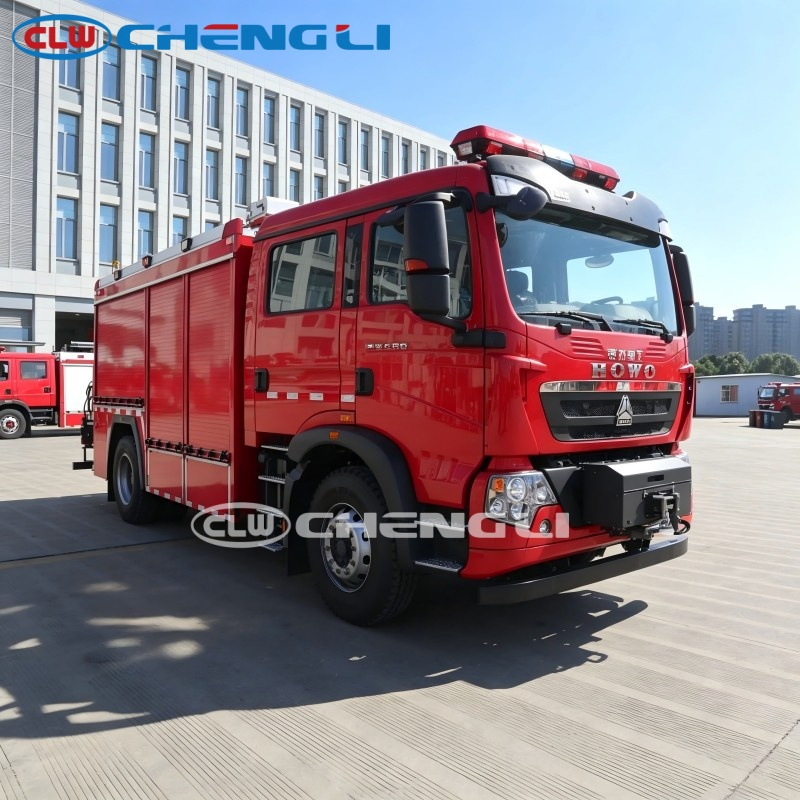
A HOWO water-and-foam vehicle, a rescue vehicle with lifting equipment and an Isuzu water configuration create different briefs. Retain their individual links when comparing the fire-truck catalogue; do not combine their separate equipment into an assumed package.
Assign design, approval and evidence responsibilities
If the buyer supplies detailed drawings, identify which dimensions and interfaces the supplier must follow and which items still need vehicle integration work. If the supplier develops the layout from an operating brief, identify the drawings and calculations it will submit. Put this division in the agreement alongside the OEM/ODM label.
| Item | Buyer decision | Supplier or nominated designer's deliverable | Record to keep |
|---|---|---|---|
| Mission and equipment | Required role, quantities, inventory and interfaces | Proposed arrangement and a clear list of deviations | Brief plus numbered compliance/deviation response |
| Chassis and body | Accept the identified proposal against the requirements | Exact models, layout, completed dimensions and loading information | Accepted configuration and drawing revision |
| Pump and agent systems | Specify the required duty and accept the agreed verification scope | Installed-system data, selected equipment and compatible arrangement | Data sheets and inspection/test plan |
| Logos and finish | Approve artwork and authority to use it | Livery drawing and agreed finish description | Approved artwork and drawing revision |
| Commercial change | Approve or reject the proposed variation | Technical consequences, priced scope and any schedule revision | Written change record linked to the accepted baseline |
This is an example allocation to agree, not a statement that an engineer has approved EX-FR-01. Separate the chassis manufacturer, completed body and installed-system responsibilities. OEM/ODM does not provide authority to reproduce another manufacturer's brand.
Follow a documented configuration and quotation process
| Step | Buyer input | Record to agree |
|---|---|---|
| Requirements | Mission, destination, quantity, crew and access | Written buying brief |
| Chassis selection | Preferred chassis, steering side and road constraints | Proposed chassis and completed configuration |
| Body and systems | Agent quantities, pump duty and equipment inventory | Layout and installed-system scope |
| Quotation | Inclusions, documents and delivery requirement | Itemised technical and commercial offer |
| Production confirmation | Accepted specification and any approved revisions | Controlled change and equipment record |
| Acceptance | Agreed inspection scope and documents | Inspection evidence against the accepted configuration |
This workflow does not promise a production timetable. Identify which documents are due before the buyer accepts the configuration, and how later changes will be approved. Keep the reference ranges in the fire-truck price guide separate from the supplier's itemised offer. They do not identify a customised vehicle's complete price or FOB/CIF scope.
Show a change explicitly: a larger foam tank
Suppose the EX-FR-01 buyer later requests 3,000 L of foam storage instead of 2,000 L while retaining 6,000 L of water. The requested foam volume increases by 1,000 L, or 50%. That is a volume calculation; it does not establish the added mass, available space, price or production time.
| Change-record field | EX-FR-01 / CR-01 illustrative entry |
|---|---|
| Accepted comparison baseline | Revision A: 6,000 L water / 2,000 L foam, two proposed vehicles |
| Requested change | Retain 6,000 L water; investigate 3,000 L foam per vehicle |
| Required technical response | Revised layout, usable tank schedule, agent compatibility, completed mass/axle statement and equipment-access review |
| Required commercial response | Separate variation amount and any schedule consequence; no amount or delivery date assumed |
| Decision at request stage | OPEN — request is not permission to build; retain Revision A until a revised proposal is accepted |
| Documents affected if approved | Configuration, body/tank drawing, equipment list, inspection plan and quotation revision |
The same method works for a new lighting installation, different hose coupling or changed compartment layout. Identify the actual difference and the documents it affects. A substitution should not be described as equivalent until its interfaces, function and acceptance conditions have been assessed.
For rescue equipment, record the proposed lifting, lighting, electrical and storage package separately. The tank, pump and crew-cab guide provides a filled example for keeping those requirements distinct. Any operational testing follows the equipment documentation and the agreed procedure, carried out by responsible personnel.
Prepare the acceptance record before the vehicle is finished
Use one line per check, with columns for requirement/revision, inspection method, observed result, attached evidence, reviewer and open action. Agree inspection before delivery and before final acceptance, and write warranty terms into the contract. USFA's capital-acquisition guidance, SM 4-21.
| Check | Actual review action | Evidence to retain | Example issue to leave open |
|---|---|---|---|
| Vehicle identity | Read chassis and completed-vehicle identification and compare them with the accepted documents | Identification photographs and the matching document references | A different chassis model with no accepted change |
| Agent storage | Compare the separate water/foam schedule and identify the agreed capacity verification method | Tank drawing, method, measurement record and selected-agent information | One total liquid figure where two tank quantities were required |
| Crew and equipment | Compare designated seats and the numbered equipment inventory with the accepted layout | Seating drawing, equipment check sheet and installation photographs | “Double cab” without the agreed six-seat arrangement being identified |
| Pump and controls | Check equipment identity and review the recorded duty against the agreed procedure | Data sheet, serial identification, instrument/test record and control documentation | A peak flow figure without the agreed pressure or test conditions |
| Service and handover | Review access to service points and match manuals, training, spares and warranty responsibilities to the contract | Access photographs and a signed handover-document checklist | A manual for another equipment version or an unresolved substitution |
The table describes actions and records to arrange; it contains no claimed factory test results or universal pass thresholds. Service access should be checked against the actual layout, including pump plumbing and electrical panels. FAMA maintenance-specification guide.
Chengli Group accepts OEM/ODM enquiries through the contact page. Send a brief like EX-FR-01, the chosen product link and the changes you want priced. Request one identifiable proposal with its deviations, drawings, inspection plan and commercial scope. Keep later decisions attached to that baseline so the delivered vehicle can be compared with what was actually accepted.
Compare the configurations below.
Dongfeng F5 4×2 6,000 L Water / 2,000 L Foam Fire Truck — The separate 6,000 L water and 2,000 L foam tanks match the real comparison baseline used in the EX-FR-01 teaching brief.
HOWO 4×2 Fire Rescue Truck with 5-Ton Knuckle-Boom Crane — Its 5-ton knuckle-boom crane and 12 kVA generator identify lifting and power equipment that need their own inclusion list and layout review.
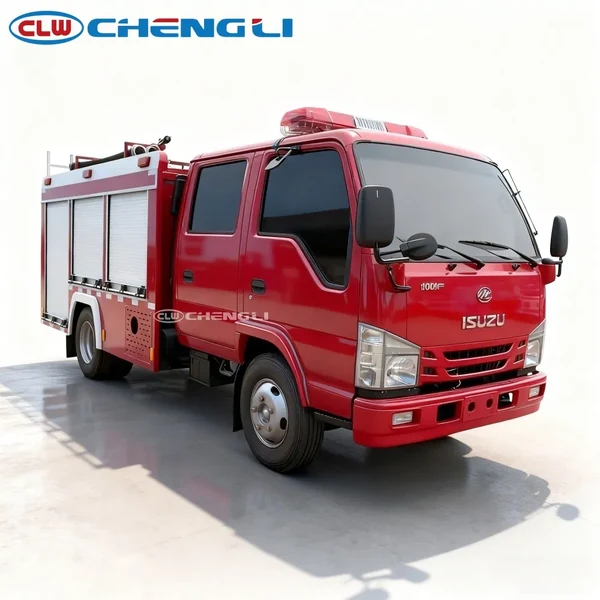
Isuzu 2,000 L Water Fire Truck — Its 2,000 L nominal water tank and 6,100 mm overall length provide a smaller water-only baseline for a different custom-build scope.
Guide questions.
Does OEM or ODM mean that any fire-truck configuration is available?
No. Identify the baseline vehicle, requested changes and design responsibilities. The hypothetical EX-FR-01 project requests seats and driving position separately from its 6,000 L water and 2,000 L foam comparison baseline; the supplier proposal must resolve those requests.
What should I send with a custom fire-truck enquiry?
Send a brief like EX-FR-01: quantity and role, linked baseline vehicle, separate tank quantities, requested cab, numbered equipment list, interfaces and commercial scope. Request a configuration/inclusion list, change record and inspection plan against one drawing revision.
When should acceptance checks be agreed?
Agree the method and records with the specification before production confirmation. Record vehicle identity, separate tank schedule, pump duty, seating and equipment against the accepted revision. Later changes, such as a request for 3,000 L instead of 2,000 L foam, require a documented technical and commercial response before approval.
Vehicles discussed in this guide
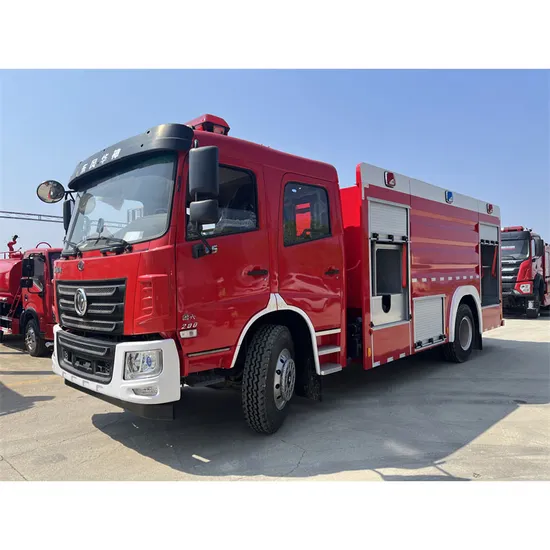
Dongfeng F5 4×2 6,000 L Water / 2,000 L Foam Fire Truck
Municipal and industrial water/foam firefighting.
View details ↗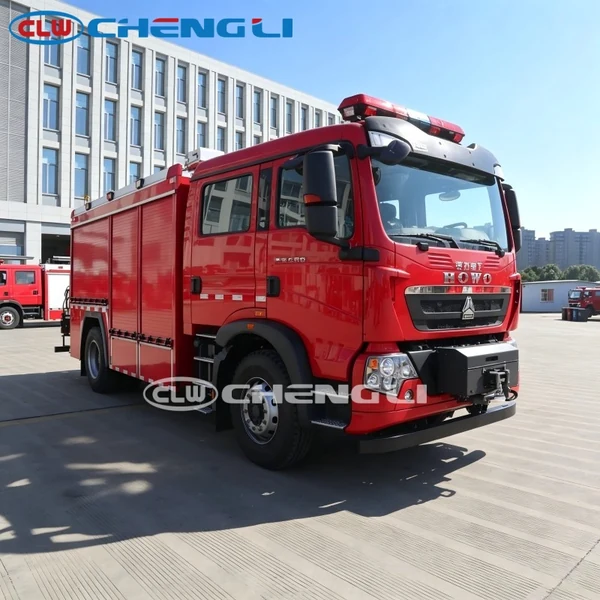
HOWO 4×2 Fire Rescue Truck with 5-Ton Knuckle-Boom Crane
HOWO 4×2 rescue truck combining a 5-ton knuckle-boom crane, 75 kN winch and 12 kVA generator for lifting, recovery and scene support.
View details ↗